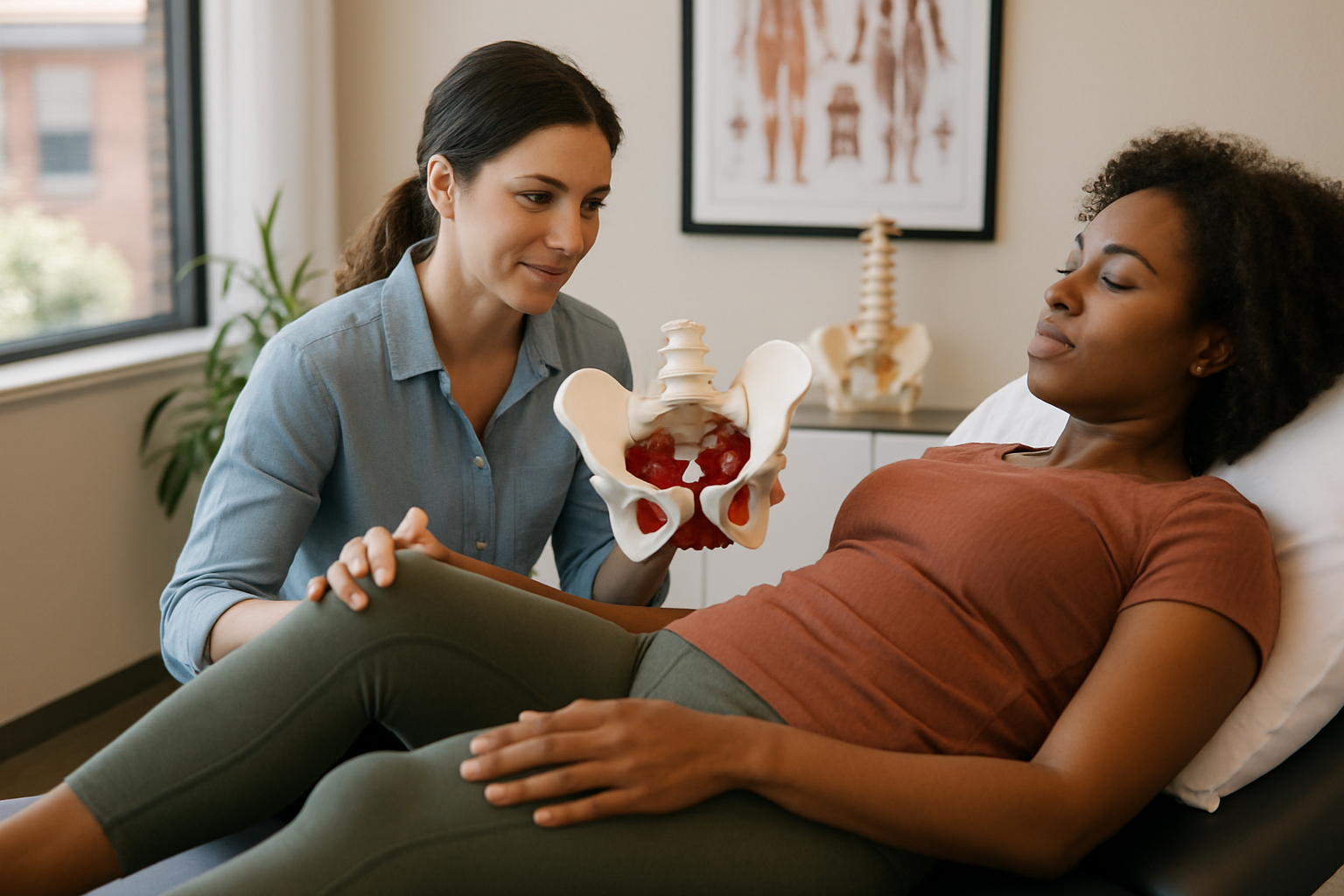
Chronic pelvic pain wears you down without making much noise. It’s there on the drive into Phoenix. It’s there after an hour at a desk, or sitting in the school pickup line. For some people it shows up during sex. For others it’s a constant feeling of needing to pee, even right after going. A lot of people have already seen a doctor or two by this point. Tests came back normal. Somebody said give it time. Pelvic floor physical therapy looks at the piece that often gets skipped in all of that. The muscles.
Tight Muscles Hurt Too
Your pelvic floor is a group of muscles across the bottom of the pelvis. They hold up the bladder, bowel, and reproductive organs. They also help control when you go. Most people have heard about weak pelvic floors and Kegels. With chronic pain it’s often the other way around. The muscles stay clenched for months, sometimes years, and don’t fully let go. Muscle that can’t relax gets sore. Cranky. It can send pain into the hips, the low back, the tailbone. That’s why Kegels sometimes make this kind of pain worse.
What It Can Feel Like
It’s different for everyone. Things people tell us:
- Aching or burning in the pelvis, low belly, hips, or tailbone
- Pain with sex, tampons, or pelvic exams
- Pain that builds the longer you sit
- Running to the bathroom a lot, or a bladder that never feels empty
- Constipation or straining that diet changes haven’t fixed
- Pain that stuck around after childbirth or surgery
Men get this too, and their pelvic floor muscles are often part of it. Endometriosis and interstitial cystitis can come with tight pelvic floor muscles as well. Therapy goes alongside medical care for those. It doesn’t replace it.
How the Care Helps Over Time
For pain, a lot of the work is teaching the muscles to let go. Breathing is a big part, because the diaphragm and the pelvic floor move together. Your therapist may use gentle hands-on work on tight spots. Stretches for the hips and inner thighs. Relaxation exercises to do at home. Habits come up too. How you sit. Whether you strain on the toilet. Whether you hold it all day at work because the restroom is a pain to get to.
Progress is gradual. You’ll still have flares here and there. You’ll also know what to do when one hits, and that takes a lot of the fear out of it. Stress and sleep sometimes get some attention as well, since a nervous system that’s always on edge tends to keep the pelvic floor guarded.
When You’re Ready to Talk About It
Pelvic pain is personal. It can be awkward to bring up. Our pelvic floor therapists at Modern Medicine of Goodyear, AZ talk about it plainly and go at your pace. Call us or fill out the online form, and we’ll find a time to go over what’s been going on.