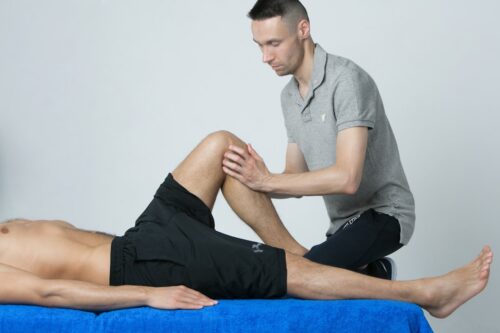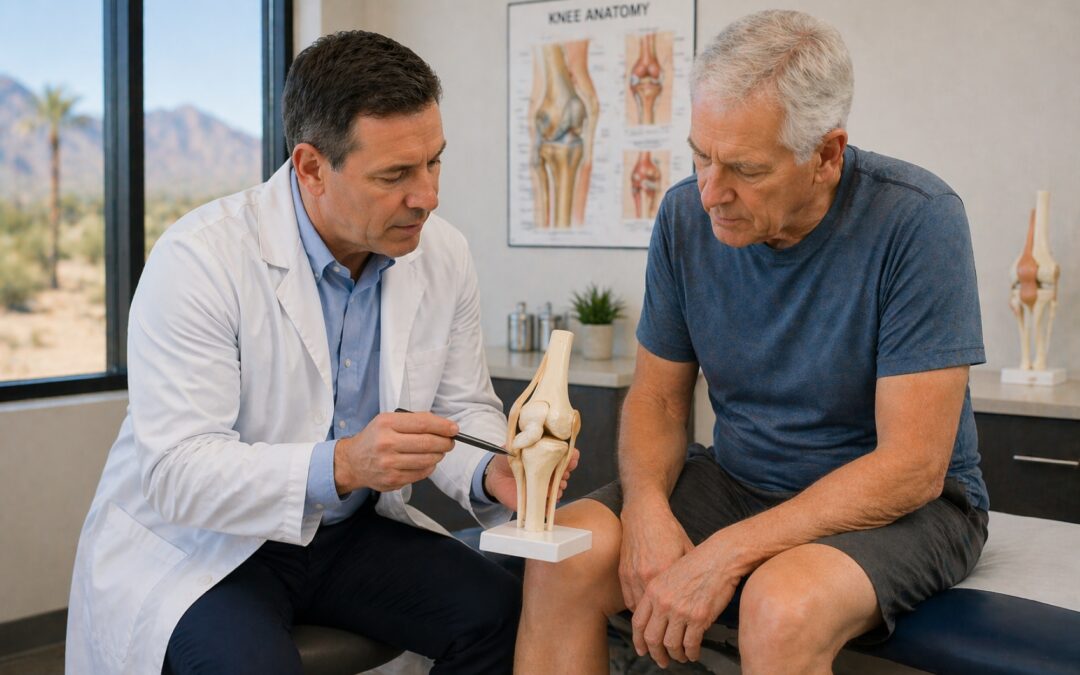
The instinct after losing strength is simple. Just start working out again. You were laid up with a bad knee, or off your feet after surgery, or stuck on the couch with a back that wouldn't cooperate, and now you feel ready to push back into it. So you load up like you used to and go. For a lot of people, that's exactly where the next setback starts.
Rebuilding strength after an injury or a real stretch of downtime isn't the same thing as normal training. The body you're working with isn't the one you had before, and treating it like it is gets people hurt again.
The Muscle Might Not Even Be Listening
Here's the part that surprises people. After an injury or surgery, the muscle around the area often stops firing the way it should. The brain quietly turns down the signal to protect things, and it doesn't turn back up on its own just because you feel better.
So you can pile on weight, but if the muscle isn't fully switching on, you're loading a system that's only half awake. Other muscles jump in to cover; the movement looks fine from the outside, and the weak spot stays weak underneath. That's how people grind through workouts for weeks and wonder why the strength isn't coming back where they need it.
Too Much, Too Soon Has a Cost
The other trap is pace. Motivation runs high when you're finally cleared to move, and the temptation is to make up for lost time in a hurry. The trouble is that healing tissue and deconditioned muscle can't take the same load they used to, at least not yet.
Push past what the tissue is ready for, and you flare the old injury or strain something new, compensating for it. Then you're back to resting, back to square one, and the whole thing drags out longer than if you'd built up gradually. Going slower early is what lets you go faster overall.
The Weak Link Problem
Strength loss is rarely even. After an injury, one specific area usually falls off a cliff while everything else holds steady. A weak quad after a knee problem. A core that switched off during back trouble. A shoulder that lost the small stabilizers after a sling.
A general workout tends to work the strong stuff and skate past the weak link, because the strong stuff takes over the moment things get hard. So the gap never closes. The thing that actually needs rebuilding keeps hiding behind everything else, doing the work for it.
What Physical Therapists Do Differently
This is where they earn their place. The approach is built around the exact problems above:
- Waking the muscle back up first, sometimes with activation work or biofeedback, before piling on load
- Targeting the specific weak link instead of training everything generically
- Adding resistance at a pace the healing tissue can actually handle
- Watching for the compensations that let strong muscles cover for weak ones
- Testing real strength markers, so progress is measured instead of guessed at
That last piece matters. Feeling stronger and being measurably stronger aren't always the same, and the gap between them is where reinjury lives.
Pay us a visit at Modern Medicine of Goodyear, AZ, and we'll find the weak links and build a plan to get your strength back the right way.