Facet joints are the small joints on the back side of the spine that guide motion and help keep each spinal level stable. When they get irritated, pain often feels deep and local, usually on one side of the neck or low back.
How Facet Pain Starts
Facet irritation can come from arthritis changes over time, repeated bending backward and twisting, or one overload moment that never fully settles. It can show up after lifting and turning at the same time, a weekend of yard work, or a workout spike when your body was not ready for that volume. Limited hip motion can add to it. When the hips do not rotate well, the lower back often takes the rotation instead. Long drives can play a role too, especially if you slump, then stand up and arch your back trying to loosen up.
How It Can Mess With Work, Errands, and Sleep
Facet pain makes you move carefully. You might avoid twisting to load groceries into the trunk. You start turning your whole body to look behind you while driving. Standing at the sink or cooking can set it off after ten minutes, then you keep shifting to find a position that doesn’t bite. Sleep can become a problem when rolling over causes a pinch, or when lying on your stomach makes the back feel jammed. A lot of people also notice they stop doing normal exercise because they fear the next flare, then they get weaker, and the cycle repeats.
The PT Approaches That Tend to Help Most
PT does not “push through” facet pain. It works around the flare, then builds you back up. We look at hip mobility, trunk control, and the specific positions that trigger your pain. Then we choose a treatment that fits your pattern. Many plans include:
- Hip mobility work so your spine stops doing all the twisting
- Core and glute strengthening to support standing, walking, and lifting
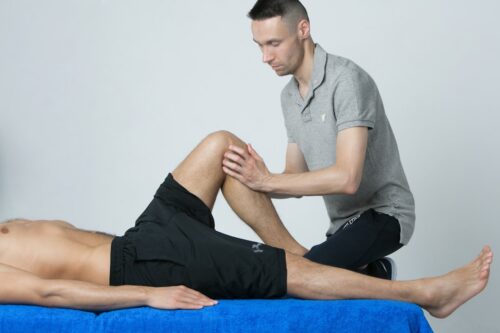
- Manual therapy to reduce stiffness and improve motion tolerance
- Movement training for bending, lifting, and getting in and out of the car
- A short home plan that targets your triggers instead of generic stretching
When Injections are an Option
Some patients need more help getting pain down enough to move well. In those cases, an orthopedic provider may discuss injections that target the facet joint area. These can be used to confirm the source of pain and, for some people, provide a window of relief so PT can do its job. It’s not a “shortcut cure.” It’s one tool. If pain drops and movement improves, you use that time to build strength and better mechanics so symptoms do not bounce right back.
When Surgery Is Actually on the Table
Surgery is not a common next step for facet joint pain alone. Providers usually consider it when there is clear instability, severe degenerative change tied to persistent symptoms, or nerve compression with worsening weakness. Even in those situations, PT often stays part of the plan because it improves function and helps you prepare for whatever comes next. Most people do best when they start with conservative care and only escalate when the case truly calls for it.
Don’t wait, schedule an appointment with Modern Physical Therapy & Sports Medicine of Goodyear, AZ.