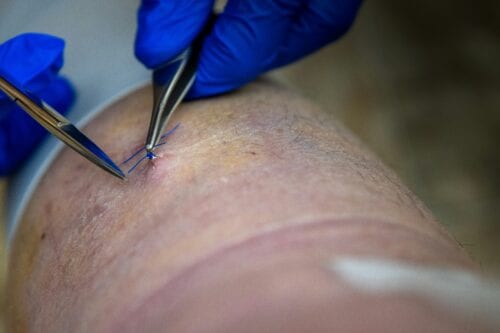
Joint problems do not always come with a clear story. Some people in Sierra Vista know exactly when it started. A bad landing on the basketball court. A fall in the driveway. A weekend of yard work left the shoulder cranky. Others have no idea where it came from. The knee just got stiff one Tuesday and stayed that way for three months.
The evaluation is where the picture starts coming together. Without that, treatment turns into guessing.
What Joint Issues Usually Look Like
Joints speak in patterns. Some are loud and sudden. Others are slow and sneaky. The signs that bring people in:
- Pain that has stuck around longer than a couple of weeks
- Stiffness that takes a while to wear off in the morning
- A joint that feels weak or as if it might give
- Clicking, grinding, or catching with certain moves
- Swelling that comes and goes
- Sleep that gets cut short by the same joint every night
Sometimes it is one joint. Sometimes the pain has spread because the body started compensating. Either way, the clinic needs to see all of it.
The First Visit, Step by Step
A real evaluation goes deeper than asking where it hurts. The visit usually covers a few things:
- History: Not just the injury, but the lead-up. What do you do for work? What activities have you been doing more or less of? Old injuries that healed wrong years ago. Sleep position. Shoes. Everything that loads the joint shows up in the daily picture.
- Movement testing: The joint gets checked through its full range. How far does it go? Where does it stop? What feels stuck? What feels loose? Whether one side moves like the other.
- Strength testing: Weakness around a joint usually points to what is going on. The shoulder that hurts often has a weak rotator cuff. The knee with pain often has a quiet quad. The hip that is locked up often has glutes that are not firing.
- Specific tests: Each joint has specific tests for the structures inside it. These help narrow down what is irritated, what is torn, what is just inflamed, and what is moving in a way it should not.
- Functional movement: How you walk. How you squat. How do you reach? How do you climb a step? The way you move through real-life motions tells more than any single test alone.
- Imaging (if needed): Plenty of joint problems get figured out without a scan. Imaging gets ordered when the answer needs more detail or when it would change the plan. Not as a default.
When to Come In
If a joint has been bothering you for more than a couple of weeks, or it is changing how you move, sleep, or get through normal days, get it checked. Waiting it out usually means the issue spreads and the climb back gets longer.
Reach out to Modern Medicine of South East Tucson to set up a joint evaluation and figure out what is really going on instead of guessing.