How These Problems Usually Start
Muscle strains often happen during sprinting, lifting, jumping, twisting, or quick changes in direction. Sometimes the pain hits right away. Sometimes the area just feels tight at first, then gets worse later that day or the next morning.
Mobility loss can show up after that. The body starts protecting the sore area. You stop using the full range. The nearby joints and muscles stiffen up. A hamstring strain can change the way you bend. A shoulder strain can make overhead reaching feel awkward. A calf strain can shorten your stride without you noticing it at first.
Range Of Motion Work For Stiff Movement
Once pain shows up, motion often drops off. The body limits movement to protect itself, but that can turn into a bigger problem if it lasts too long.
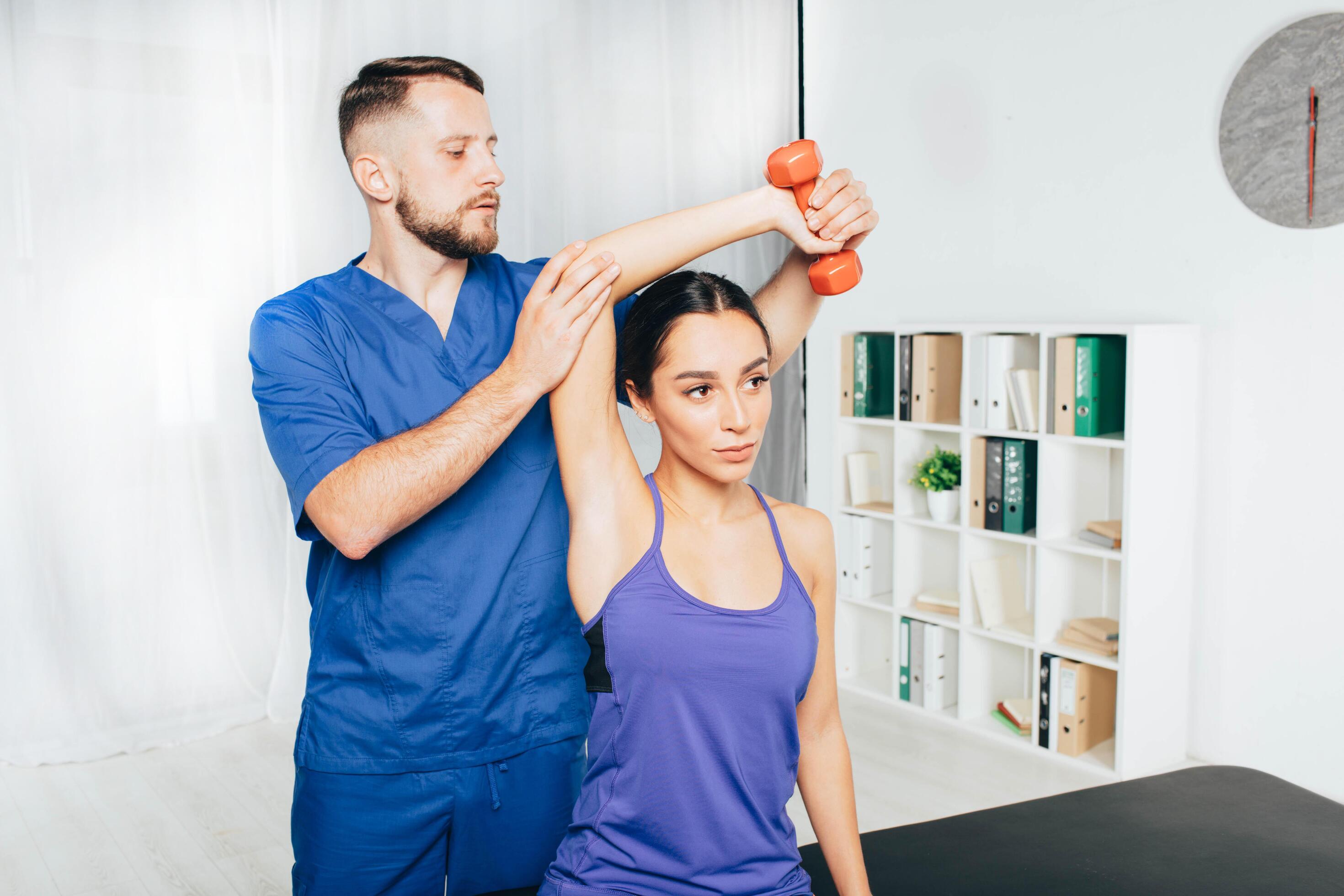
Range of motion work helps patients move the area again in a controlled way. This may include guided stretching, repeated movement drills, and mobility work for nearby joints that have started to stiffen up, too.
This type of treatment is often best for patients who feel blocked during bending, reaching, turning, squatting, or walking. It fits well after shoulder strains, hip strains, groin injuries, calf strains, and upper back muscle problems.
Strength Work For Repeat Muscle Strains
A strained muscle often feels better before it is ready for full activity. That is one reason the same area gets hurt again.
Strength work helps rebuild the load tolerance the tissue has lost. Early exercise may stay simple and controlled. Later work may build into more resistance, more range, and more demand.
This option is often best for repeat hamstring strains, calf pain during running, quad strains, hip muscle strains, and shoulder pain that returns with lifting.
Balance And Control Work For Lower Body Injuries
Some lower-body strains leave the leg feeling off even after the pain improves. A person may feel stronger, but still not trust the area during stairs, single-leg tasks, or quick movement.
Balance and control drills help close that gap. Treatment may include single-leg work, step drills, lower body coordination, and controlled landing or deceleration work.
This often works best for calf strains, hamstring strains, groin injuries, quad strains, and hip muscle strains.
Movement Retraining For Ongoing Flare-Ups
Some strains keep coming back because the same movement pattern keeps feeding the problem. A runner may keep overloading the calf. A lifter may keep stressing the hip during squats. A patient with shoulder pain may keep reaching with poor control.
Movement retraining looks at those patterns. It may focus on running form, squat control, step pattern, reaching mechanics, or lifting setup.
This type of care is often best for patients with repeat flare-ups, long-standing stiffness, or pain that returns as soon as activity picks up again.
Schedule a visit with Modern Medicine of Chandler, AZ to get started.