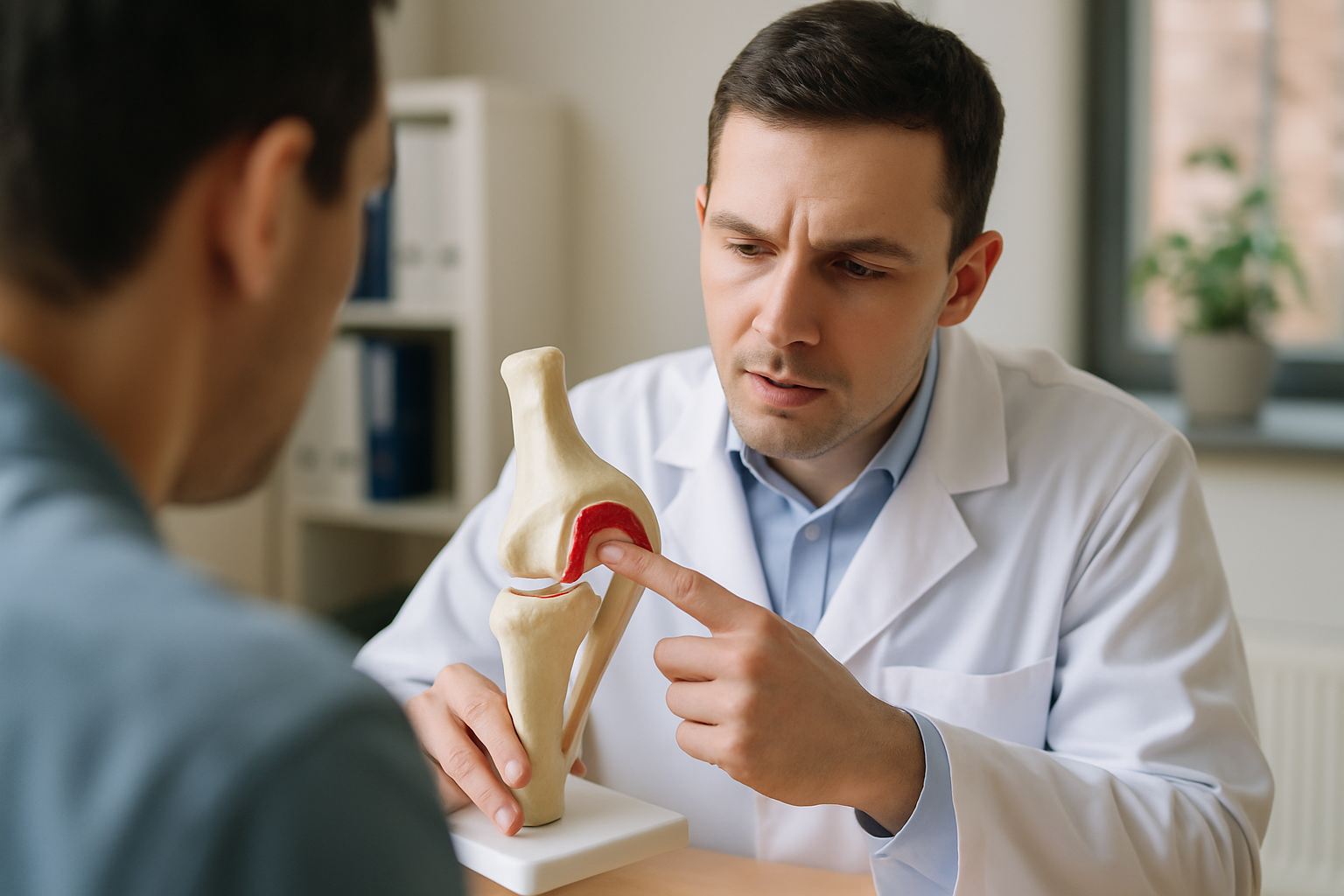
Patients often use bulging disc and herniated disc for the same problem. With a bulge, the disc has pushed outward a little, but its outer wall is still in one piece. A herniation goes a step further. The wall has split, and some of the soft middle has leaked through the gap. Either one can lean on a nerve, and that’s when pain runs from your buttock down into your calf or foot. Even with pain that bad, most people never need an operation.
What the Leg Pain Is Telling You
The nerves for your legs come out of the spine near your belt line. If a disc is bulging right there, it can press on a nerve as it heads out. That’s why a problem in your lower back can feel like a burning line down your thigh or an electric shock into your calf.
People also notice:
- Numb spots on the shin or the top of the foot
- A long meeting or car ride that makes everything worse
- Coughing or sneezing that sends a jolt down the leg
- Weakness, like a foot that slaps the ground when you walk
Why Discs Bulge
Part of it is age. Discs dry out over time and lose their bounce. Everyday habits add to it. A desk job, a lot of driving, or lifting boxes with a rounded back all put more pressure on the discs. Smoking and extra weight make it more likely too.
What to Do in the First Few Weeks
Bed rest used to be the standard advice, but it isn’t anymore. Most people do better if they keep moving in small doses, like a ten-minute walk a few times a day. A heating pad or ice can help you get comfortable, and the heavy lifting can wait.
How Orthopedic Care Helps
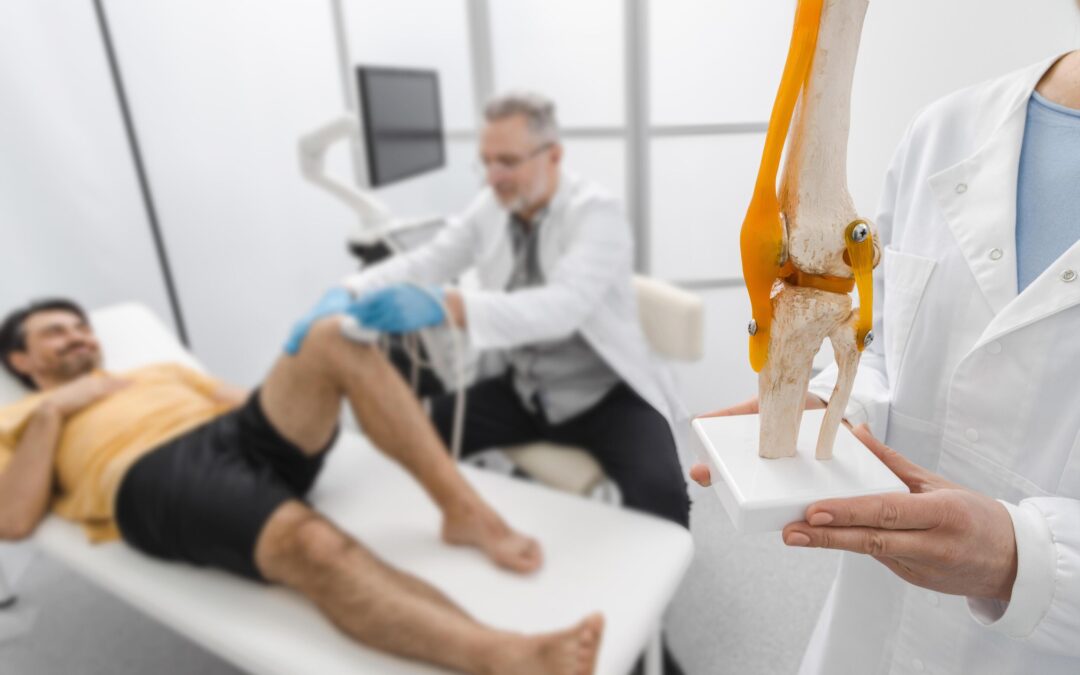
We’ll start by asking where the pain goes and what makes it better or worse. Then we test your leg strength, reflexes, and feeling. We only order an MRI if the pain is severe or isn’t getting better.
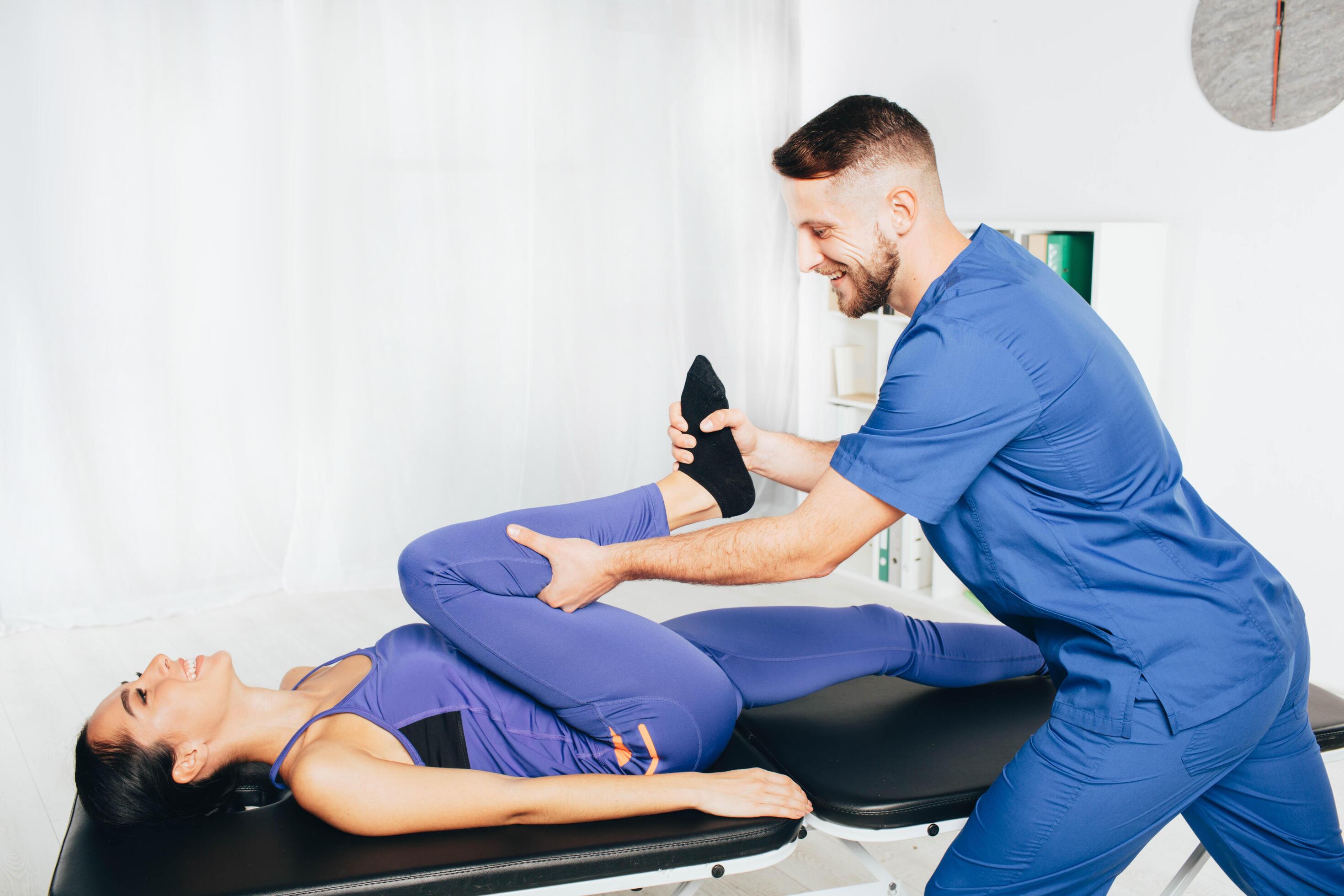
Most of the treatment happens in physical therapy. We look for movements that ease the leg pain, often by bending backward or changing how you sit. One thing we watch for is the leg pain backing off while the back pain gets a little worse. That sounds bad, but it’s often a sign the nerve is getting more room. Once things settle, we start building strength in your core and hips.
If pain keeps you from doing the exercises, an injection near the nerve is an option. Surgery is saved for cases that don’t improve.
When to Get Help Right Away
Some symptoms mean you should go to the ER instead of waiting. These include numbness around the groin, losing control of your bladder or bowels, and a leg that’s getting weaker quickly.
If shooting leg pain has been slowing you down, come see our team at Modern Medicine of Tucson, AZ. We’ll find out what’s pressing on the nerve and help you move comfortably again.