Do I Have A Sprain or a Strain?
People use these words interchangeably. They are different injuries involving different tissues.
A sprain is a ligament injury:
- Ligaments connect bone to bone and stabilize joints
- Caused when a joint gets forced past its normal range
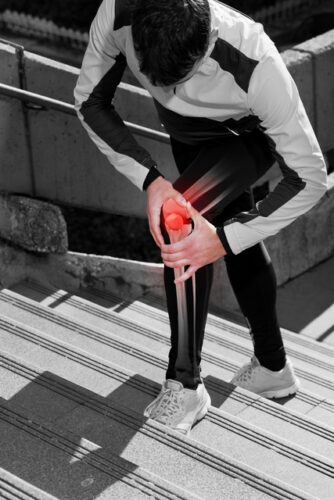
- Ankle sprains are most common, but knee, wrist, and shoulder sprains show up regularly, too
A strain is a muscle or tendon injury:
- Occurs when a muscle gets overloaded or overstretched and the fibers tear
- Common examples include hamstring strains from sprinting, calf strains from a sudden push-off, and rotator cuff strains from overhead activity
Both injuries come in grades:
- Grade one is mild fiber disruption, with the structure still intact
- Grade two is a partial tear with real functional loss
- Grade three is a complete rupture
How Sprains Heal
Ligaments have a limited blood supply. That is why sprain recovery takes longer than most people expect.
Grade one ankle sprains settle in a week or two. Grade two sprains take four to eight weeks for tissue repair and longer for full functional recovery. The other issue is proprioception. The ligament is loaded with nerve endings that tell the brain about joint position. When it gets damaged, those signals get disrupted. That deficit is what causes the ankle to keep rolling on uneven ground years after the original injury. Healing the tissue is one part. Restoring that sensory function is the other. Most people skip the second part entirely.
How Strains Heal
Muscle tissue has a better blood supply, so it heals faster. But faster does not mean simple.
Grade one strains can resolve in a week or two. Grade two strains take four to eight weeks to heal and require careful loading during repair. The tricky part is scar tissue. It forms during healing and is less elastic than the original fiber. If the muscle returns to full activity without restoring eccentric strength through the full range, that scar tissue becomes a site of repeated injury. Hamstring re-tears at the same spot are almost always a product of incomplete rehab.
What Sports Medicine Covers
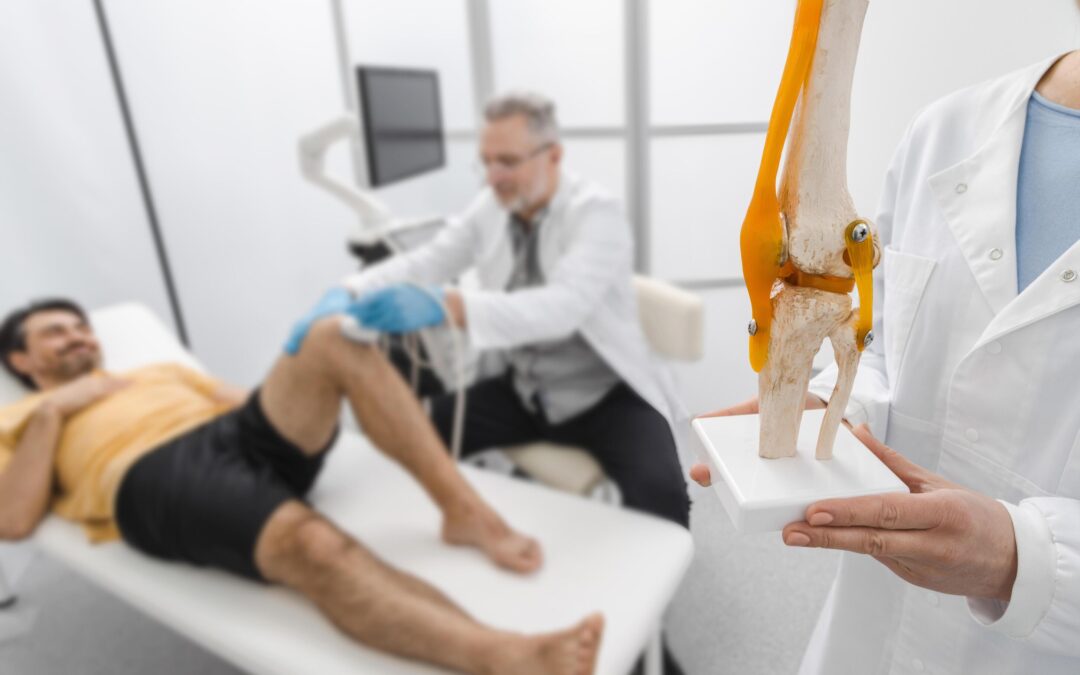
A sports medicine evaluation determines what the injury is and what grade it falls into. Clinical assessment tells a lot. How the joint moves, where it is tender, and how it responds to specific stress tests. Imaging gets added when the extent of damage is unclear or a complete rupture needs to be ruled out.
From there, a treatment plan gets built around the specific tissue, the grade, and what the patient needs to return to.
What Physical Therapy Does
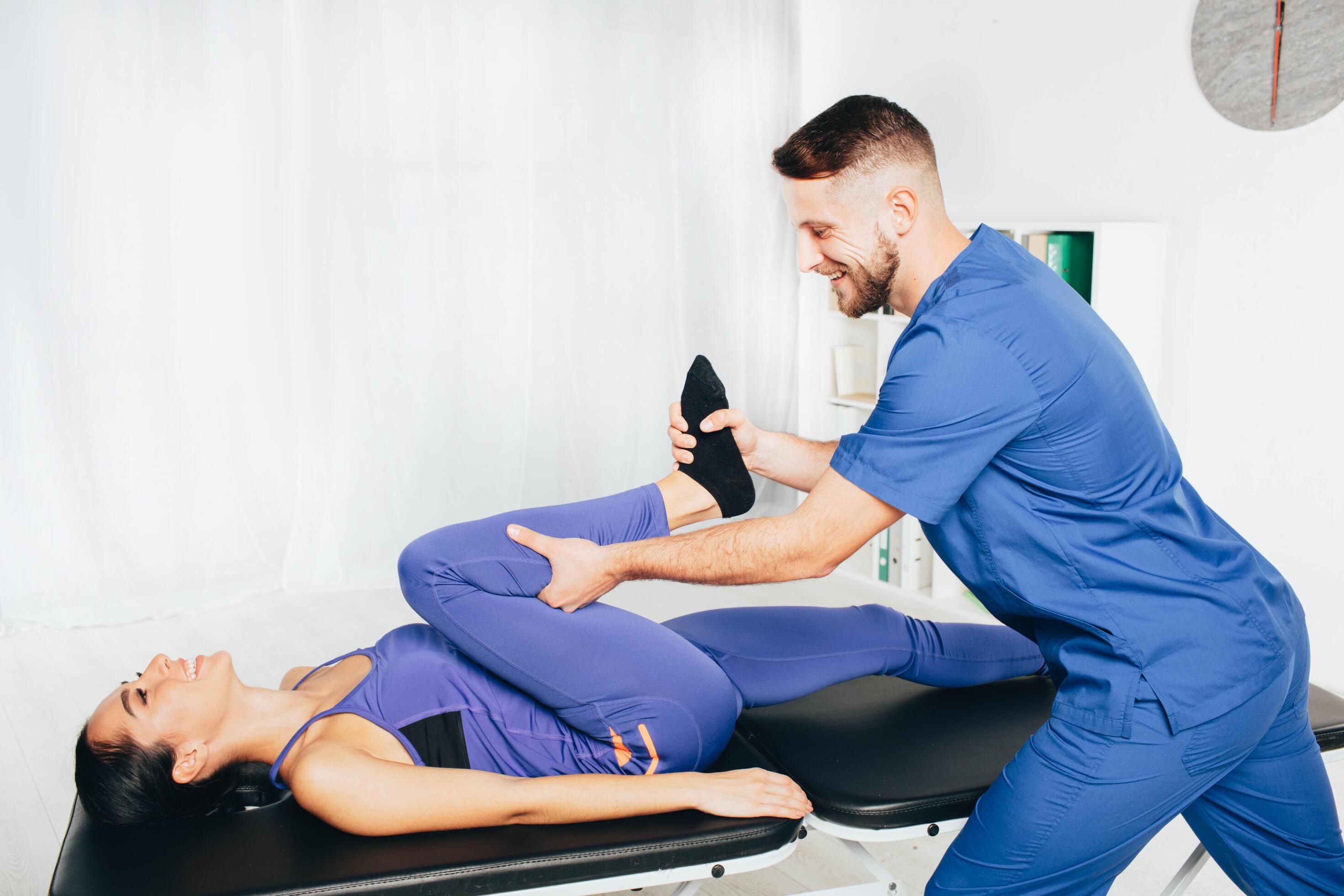
For sprains, early rehab focuses on swelling reduction, protecting the healing ligament, and maintaining range in surrounding joints. The middle phase introduces progressive loading and single-leg balance work to retrain proprioception. Late phase covers cutting, pivoting, and whatever the patient does that requires the joint to be fully reliable.
For strains, the goal is to protect the tear and maintain gentle activation without overloading healing fibers. The middle phase introduces eccentric loading. This is the part most people miss when managing on their own. Eccentric exercise drives proper fiber alignment during repair and is the main reason strains stop recurring when rehab is done properly. Late phase restores full strength and sport-specific function before return to activity.
If you are dealing with a sprain or strain, contact Modern Medicine of Tucson, AZ to schedule a sports medicine evaluation and see how we can help.