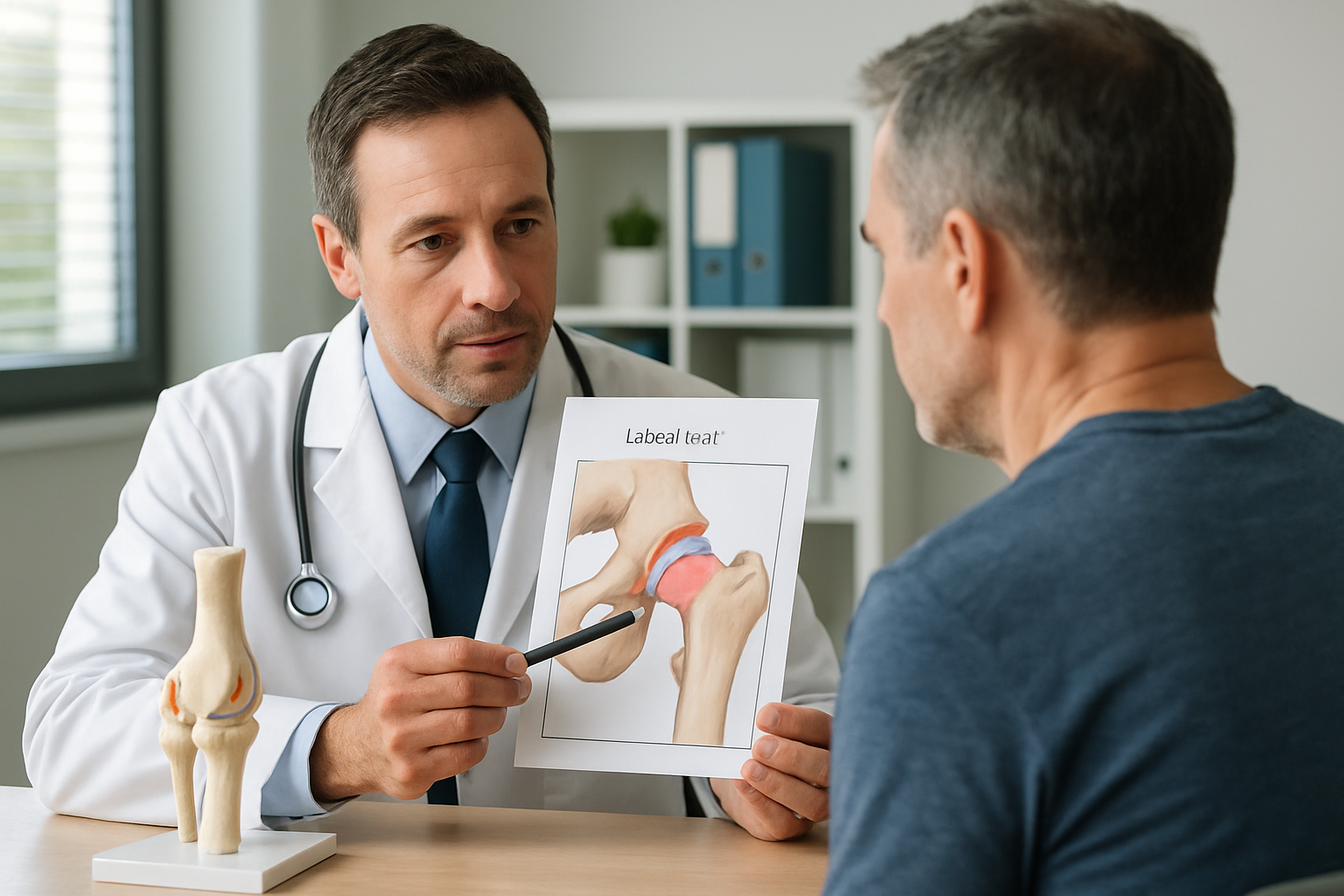
Labral tears show up on imaging more often than people expect, including in plenty of folks who feel fine. That's worth knowing, because seeing "labral tear" on a report can make the whole thing feel more dire than it is. Plenty of people with a torn labrum get back to full function without ever having it repaired.
What The Labrum Does
Both your hip and your shoulder are ball-and-socket joints, and both have a labrum, a ring of cartilage lining the rim of the socket. It deepens the socket, helps keep the ball centered, and cushions the joint as it moves.
The two joints are different animals, though. Your shoulder socket is shallow by design, which is what gives you all that range of motion at the cost of stability. Your hip socket is deep and inherently stable, built to carry your weight. That difference shapes how a tear in each one behaves.
How Tears Happen
- Shoulders: a fall on an outstretched arm, a dislocation, or years of overhead throwing and work
- Hips: pivoting and cutting sports, or hip anatomy that pinches the labrum with certain motions
- Both: gradual wear over time, with no single injury to blame
What you feel is usually a deep ache in the joint, catching or clicking in certain positions, and sometimes a sense that the joint isn't quite secure.
Why Non-Surgical Care Often Works
Here's the logic. The labrum contributes to stability, but it isn't the only thing doing that job. Muscle provides a large share of joint control, and unlike cartilage, muscle responds beautifully to training.
So the approach is to build up what can be built. In the shoulder, that means the rotator cuff and the muscles controlling your shoulder blade. In the hip, it's the glutes and the deep stabilizers around the joint. Strengthen those and the joint can stay controlled and comfortable even with a tear present.
What Treatment Involves
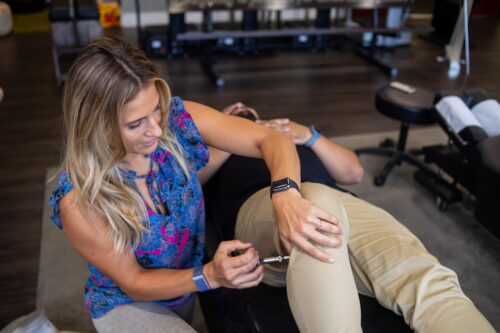
We start by calming the joint and steering you out of the specific positions that pinch the tear. Then comes the rebuilding: targeted strengthening for the muscles that stabilize that joint, work on your sense of joint position, mobility work where stiffness is contributing, and a gradual return to the activities that matter to you.
When Surgery Still Makes Sense
We'll be straight about the limits. A shoulder that keeps dislocating, a hip that keeps locking or catching hard, or a joint that stays unstable after a genuine course of rehab may need repair. Younger athletes in high-demand sports sometimes fall into that group too. But that's a smaller slice than most people assume.
Joint catching, aching, or feeling loose? Modern Physical Therapy & Sports Medicine of Mesa, AZ can assess it and build the rehab. Reach us by phone or the online booking form.