Plantar fasciitis can start small. Maybe your heel feels tight in the morning. Maybe the first steps of the day feel sharp. Over time, that quick sting turns into steady discomfort. Walking gets harder. Standing feels tiring. Simple tasks demand more effort than they should. At Modern Medicine Physical Therapy & Sports Medicine of Mesa, AZ, we see how fast this problem can grow when people try to push through it.
What is Plantar Fasciitis?
The plantar fascia is a thick band of tissue that supports the arch of your foot. When it becomes irritated, it tightens and inflames. The pain often sits near the heel. It can also stretch along the bottom of the foot. You may feel it most during the first steps after resting or after long periods on your feet. The tissue needs time and the right care to settle.
How It Happens
Plantar fasciitis can start from many small stresses. Long hours standing at work. A sudden jump in running mileage. Tight calves. Poor foot support. Weight shifts after an injury. These factors add strain to the fascia until it reacts.
Common triggers include:
- Long days on hard floors
- Worn shoes with poor support
- Sudden increases in walking or running
- Tight calf or ankle muscles
- Old injuries that change how you move
What It Does To The Rest Of The Body
When your foot hurts, your whole body adjusts. You may shift your weight to the other side. You may walk differently to avoid pressure. These changes strain the knees, hips, and lower back. Over time, this chain reaction causes new aches. What starts in the heel spreads to other areas without you noticing. The body works hard to protect the sore spot, but that protection can create more problems.
How Manual Therapy Helps
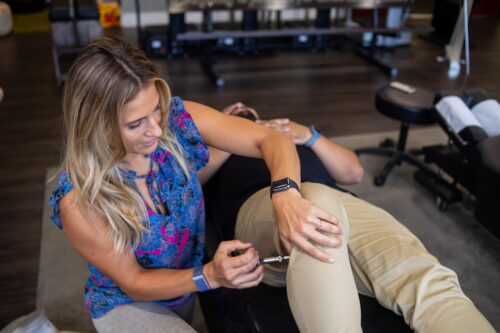
Manual therapy focuses on gentle, targeted work to ease tension in the foot and lower leg. This improves the way the fascia glides and reduces irritation. It also helps restore normal movement so you do not rely on awkward compensations.
Manual therapy can:
- Reduce tightness in the plantar fascia
- Improve mobility in the foot and ankle
- Release tension in the calves and surrounding muscles
- Support smoother, more natural walking patterns
- Reduce stress on the knee, hip, and back
What Treatment Consists Of
Your session begins with a clear conversation about your symptoms. We check how you walk. We test ankle motion. We look at calf strength. We identify what parts of your foot and leg carry too much strain. Once we see the pattern, we build your plan. Manual therapy may include soft tissue work, joint mobilization, or gentle stretching. We pair this with strength training and simple daily habits that protect the fascia as it heals.
If heel pain slows you down, reach out to schedule your visit with Modern Medicine Physical Therapy & Sports Medicine of Mesa, AZ. We will guide you through the process and help you work toward steady, comfortable movement.