Some of our patients haven’t been able to walk more than a block in a long time. Their knees hurt, or their back locks up, and so they’ve mostly stopped trying. Then they get into the pool for the first time and do a whole lap of marching without much pain. It isn’t in their head. The water is quietly taking on a lot of the work their joints usually do, and that’s often what finally lets someone exercise again after months of avoiding it.
What the Water Does
Stand in a pool up to your chest and your legs suddenly have a lot less of you to carry around. That’s the whole trick, really. Your knees don’t grind the way they do on the sidewalk, so you can keep moving longer. Hurry across the pool, on the other hand, and the water fights you a little the whole way, which is exactly the kind of resistance we want for building strength.
Warm water is a bonus. Stiff muscles tend to relax in it, and plenty of people who creak getting out of a chair find their joints move more easily in the pool. We also like it for balance practice, because if you tip a little too far, you drift slowly instead of landing on a hard floor.
Who It Helps
We see the best results in people who have:
- Achy, arthritic knees, hips, or backs
- A new knee or hip that’s still stiff, once the incision has fully closed
- Chronic lower back pain that flares with walking or standing
- Balance problems or a fear of falling
- General weakness after an illness or a long stretch of not moving much
It isn’t the right choice for everyone. Open wounds, certain heart problems, or trouble with bladder control can rule it out, so we’ll go over your health history first.
What a Session Looks Like
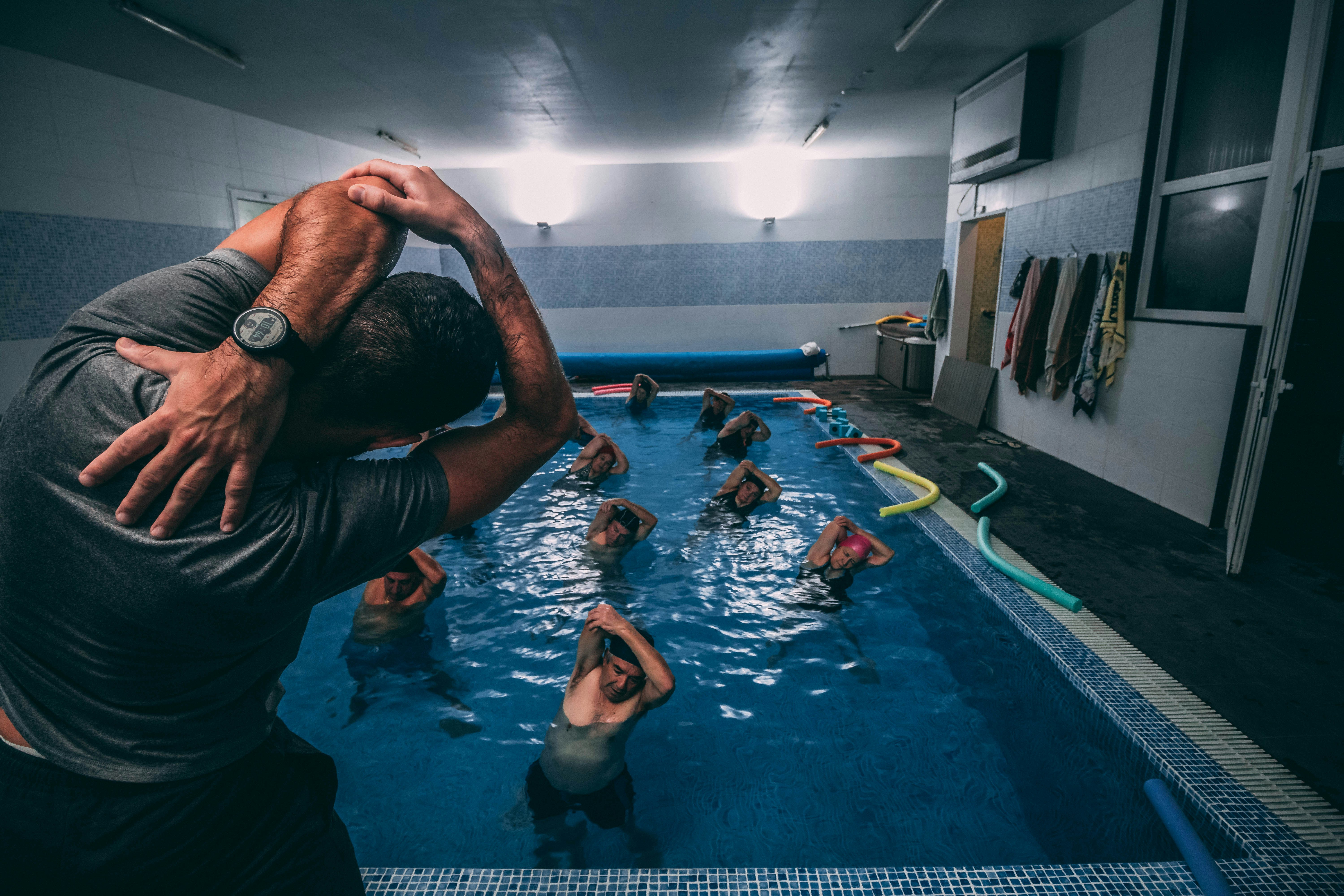
Swimming skills aren’t needed, since you’ll stay in the part of the pool where your feet are on the bottom and the water is somewhere between your waist and your chest, with your therapist in there beside you. Expect to walk laps forward, backward, and sideways. Then there are leg swings while you hang on to the edge, a few shallow squats, and some standing on one foot if you’re up for it. Pool noodles make things easier, and foam water weights make them harder.
A few weeks in, we usually start sprinkling in some exercises out of the water as well, since the real test is whether you can handle the stairs at home, the curb at the grocery store, and climbing out of the car without grabbing the door frame. That’s where the progress really counts.
Keeping It Going
Many people in Sun City have a pool at their rec center, which makes it easy to keep up the routine on your own once therapy wraps up. We’ll give you a simple plan to follow there.
If your joints have made moving around harder than it used to be, come see us at Modern Medicine of Peoria, AZ. We’ll help you figure out whether working in the water is a good fit for you.