Balance is your body’s ability to stay upright while you move, turn, step, and react. Fall risk is the chance that a small slip, a quick turn, or a step on uneven ground turns into a fall. Some people notice dizziness. Others feel more like wobbling, drifting, or not trusting their feet. When you start limiting activity because you feel unsure, your legs get weaker, your reactions slow down, and the problem often grows.
How These Problems Usually Begin
Balance issues rarely come out of nowhere. They tend to start with small changes that build over time.
- A fall, even a “minor” one
- An illness or long stretch of low activity
- New or changed medications
- Inner ear issues or dizziness with head movement
- Neuropathy or reduced sensation in the feet
- Vision changes that make low light harder
- Ongoing joint or back pain that changes your walking pattern
Why Physical Therapy Helps
At Modern Physical Therapy & Sports Medicine of Surprise, we treat balance and fall risk by finding the main drivers behind your unsteadiness, then training those systems in a safe, repeatable way. Balance is not one skill. It’s strength, ankle mobility, coordination, reaction time, and how your brain uses vision and sensation from your feet. PT helps because you get the right challenge level, so you improve without feeling like you are constantly “testing” yourself at home.
What a Balance Evaluation Looks Like
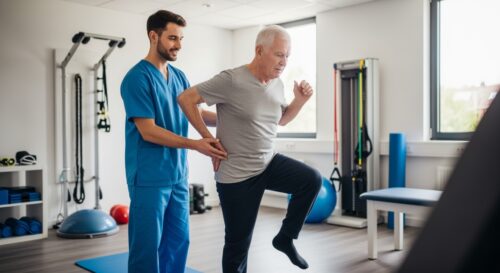
Your first visit starts with a simple conversation about when you feel unsteady and what you’ve stopped doing. Then we check how you walk, how you turn, how you get up from a chair, and how your legs and ankles support you. We also look for patterns that raise fall risk, like short shuffling steps, poor foot clearance, or hesitation during direction changes.
What Treatment Can Include
Your plan should match real life, not just clinic exercises. Treatment often includes:
- Leg and hip strengthening for better support and quicker reactions
- Ankle and foot control work to improve stability on uneven ground
- Balance drills that train recovery, not just “standing still”
- Walking practice that includes turns, starts and stops, and obstacles
- Simple home safety steps to reduce risk while you build strength
How Long It Takes to Feel More Stable
Some people notice early wins fast, like standing up easier or walking with less wobble. Bigger changes usually build over a few weeks as strength and reaction time improve. The goal is steady progress you notice at home, on stairs, in parking lots, and in stores.
Get Help with Balance and Falling Issues
Schedule a balance and fall risk evaluation with Modern Physical Therapy & Sports Medicine of Surprise, AZ, and get a clear plan to move with more confidence.